Hiring Temporary Workers: What UK Employers Need to Know
UK employers looking to hire temporary workers need to understand key operational considerations around compliance, shift management, and timesheet approvals.
usman ahmed

Key takeaway
Proactive planning around compliance, shift management, and timesheet processes is crucial for UK employers to effectively integrate temporary workers and mitigate operational risks.
Bringing temporary workers into your UK operations can offer flexibility and address fluctuating staffing needs. However, unlike permanent hires, there are distinct operational and compliance considerations. Employers know before hiring that understanding these areas early can prevent issues down the line, ensuring a smoother process for both your business and the temporary staff you engage. This guide focuses on the practical aspects UK employers should consider when planning to integrate temporary workers, from initial setup to day-to-day management.
Understanding the Operational Landscape for Temporary Staffing
Before engaging temporary staff, hirers should consider the operational impact. Temporary workers often fill specific shift patterns or project-based roles, meaning their integration requires clear communication channels and efficient systems. This includes how shifts are communicated, accepted, and recorded, as well as how availability is managed. For instance, a common scenario involves a client cancelling a shift late or reducing worker numbers, which needs a responsive process to avoid unnecessary costs or worker dissatisfaction.
Compliance Essentials UK Employers Know Before Hiring
Compliance is a critical area for any UK employer engaging temporary workers. Key aspects include right-to-work checks, AWR (Agency Workers Regulations), and ensuring proper record-keeping for timesheets and payroll. While agencies typically handle many of these compliance details, employers still have a responsibility to verify that processes are in place. For example, hirers should confirm that agencies are conducting appropriate right-to-work checks and that the temporary workers provided are eligible for the proposed duties and hours. Overlooking these details can lead to significant penalties and operational disruption. Keeping oversight of these elements is crucial for your business. For more detailed support on managing temp staff, exploring solutions that offer clear staff management for employers can be beneficial.
Managing Shifts and Availability
Effective shift management is vital when working with temporary staff. Employers need a clear system for posting shifts, receiving requests, and approving bookings. This helps in maintaining visibility over your temporary workforce and ensures you have the right people in the right places at the right time. Consider the impact of last-minute changes; if a shift needs to be extended or adjusted, how easily can this be communicated to the worker and the agency, and how are approvals recorded? Tools that offer streamlined shift management for employers can help here.
Timesheets and Payroll Approvals
The process for timesheet submission and approval directly impacts payroll accuracy and worker satisfaction. For temporary staff, timely and accurate payment is essential. Employers should have a clear understanding with their agency about how timesheets are submitted, verified, and approved. Delays or discrepancies can lead to administrative burden and potential disputes. Implementing a system that provides transparent tracking and quick approval workflows can significantly reduce the administrative overhead associated with managing temporary workers' pay. This ensures that earnings are tracked accurately and approved promptly.
Practical Staffing Examples
Consider these common scenarios:
- Late Cancellation: An event hirer needs five hospitality staff for tomorrow, but a last-minute policy change means they now only need two. Without an efficient system to communicate this to the agency and adjust bookings, the hirer might be liable for cancelled worker shifts, or the agency faces difficult conversations with workers already assigned.
- Extended Cover: A care home needs an extra night shift covered at short notice due to staff illness. Their current system involves multiple phone calls and emails. A more integrated approach would allow the care home to quickly post the urgent shift, and the agency to rapidly match and offer it to available, compliant staff.
- Timesheet Discrepancy: A logistics firm uses temporary drivers, and a driver's submitted hours for a particular route differ from the firm's records. Manual reconciliation can be time-consuming and prone to error. A digital timesheet approval system, where both the hirer and worker confirm hours, creates a clear audit trail and reduces disputes.
Key Considerations Before Engaging Agencies
Before partnering with a temporary staffing agency, assess their processes for managing worker availability, compliance documentation, and communication. A good agency will be transparent about their systems and how they support your operational needs. Understanding their approach to worker verification and their ability to provide compliant, reliable staff is crucial. Always ask about their process for handling no-shows or last-minute changes to ensure continuity of service.
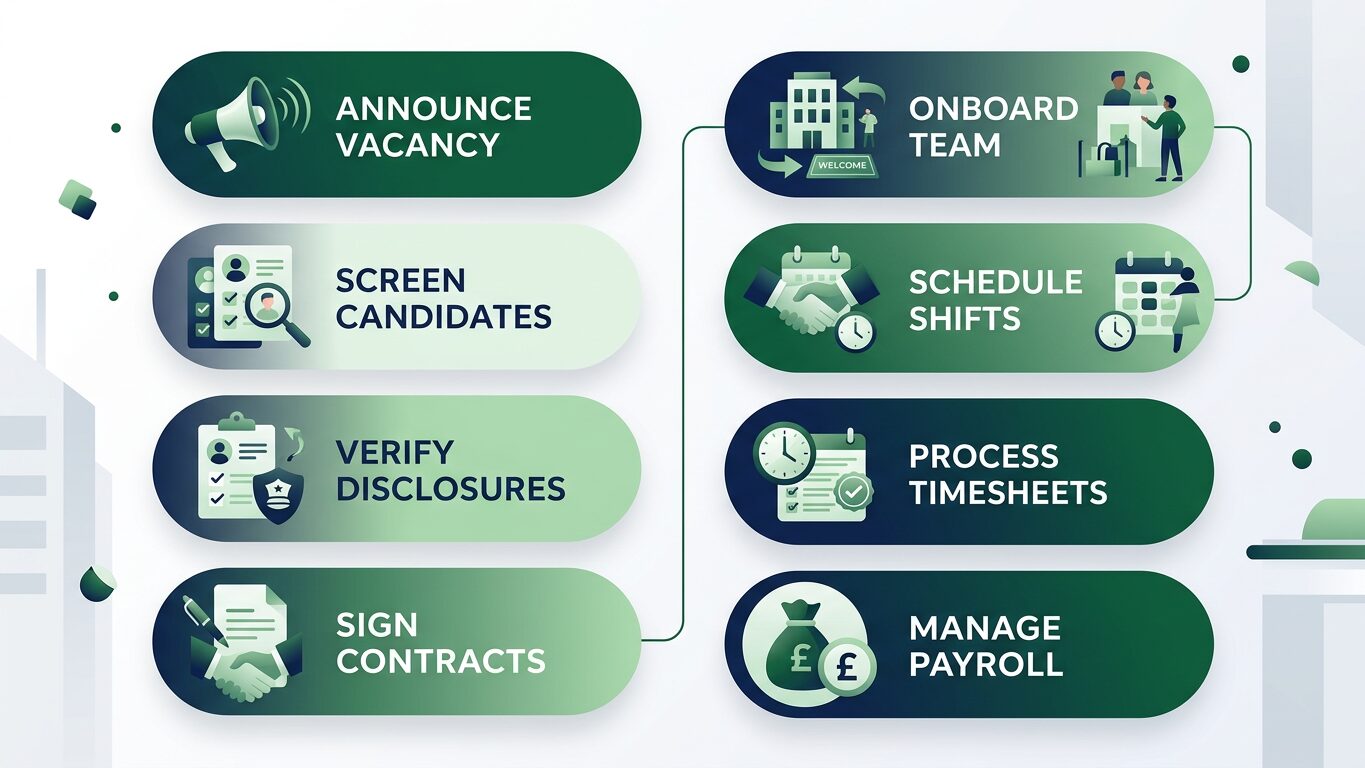
A quick reference checklist for UK employers preparing to engage temporary workers and agencies.
Checklist for UK Employers Hiring Temporary Workers
Before bringing temporary staff on board, consider the following points:
- Verify agency compliance processes: Confirm the agency conducts thorough right-to-work checks and adheres to AWR.
- Define clear shift communication: Establish how shifts will be posted, accepted, and how changes are managed.
- Streamline timesheet approvals: Agree on a system for efficient timesheet submission, verification, and approval.
- Understand cancellation policies: Clarify the agency's and your own procedures for late cancellations or reductions.
- Assess worker verification methods: Understand how the agency ensures workers have the right skills and experience.
- Review operational visibility: Consider how you will track worker attendance, hours, and overall spend.
Managing temporary staff effectively requires clarity and robust processes. With the right systems in place, UK employers can leverage the flexibility of temporary staffing without compromising on compliance or operational efficiency. Explore how Youtemp can support your temporary staffing needs, from shift requests to timesheet approvals. Join our waitlist for updates and early access.
Streamline Your Temporary Staffing Operations
Youtemp helps UK employers manage shifts, approvals, and compliance for temporary workers. Join our waitlist to see how you can gain better control and visibility.