Verifying Temp Worker Credentials & UK Staffing Compliance
Employers engaging temporary staff in the UK need clear processes for worker credential verification and maintaining temp staffing compliance.
usman ahmed

Key takeaway
Proactive digital verification and clear internal processes are essential for employers to manage temporary staff compliance and prevent operational disruptions.
Ensuring proper temp staffing compliance and verifying worker credentials is a critical operational requirement for employers. When engaging temporary staff, hirers are responsible for maintaining oversight of their workforce, even if supplied by an agency. This involves confirming that workers possess the necessary qualifications, certifications, and legal right to work within the UK. Without robust processes, employers risk operational disruptions, financial penalties, and reputational damage. This guide outlines practical steps and considerations for managing a compliant temporary workforce.
Understanding Employer Responsibilities in Temp Staffing Compliance
While recruitment agencies manage many pre-placement checks, hirers still hold responsibilities when temporary workers are on their sites. These responsibilities typically involve verifying that the temporary workers meet the specific requirements of the role, understanding their working patterns, and ensuring a safe working environment. It’s not just about the initial placement; ongoing oversight is crucial. For instance, ensuring that a worker's certifications remain current or that a temporary worker's right-to-work status hasn't changed during an extended placement falls to the hirer to monitor, often in partnership with the supplying agency. Clear communication channels with agencies are essential for this shared responsibility framework.
Key Worker Credential Verification Areas
Effective worker credential verification is fundamental. Employers should have a structured approach to confirm that temporary staff are suitable and legally cleared for their roles. This often includes:
- Right-to-Work Checks: While agencies perform the initial checks, employers should satisfy themselves that these checks have been completed and retain visibility of the associated documentation. This is a non-negotiable legal requirement in the UK.
- Qualifications and Certifications: For roles requiring specific skills (e.g., healthcare, construction, certain technical roles), employers must verify that workers hold valid and up-to-date qualifications. This might involve checking professional registrations or specific course completion certificates.
- DBS Checks (where applicable): For roles involving regulated activity with children or vulnerable adults, a Disclosure and Barring Service (DBS) check is mandatory. Employers should confirm the agency has conducted the appropriate level of DBS check.
- Training Records: Some temporary roles require specific site induction training or health and safety certifications. Employers should verify that these have been completed before a worker commences duties.
Utilising a platform that centralises worker information, alongside a dedicated employer portal, can provide a clear audit trail for these verification processes.
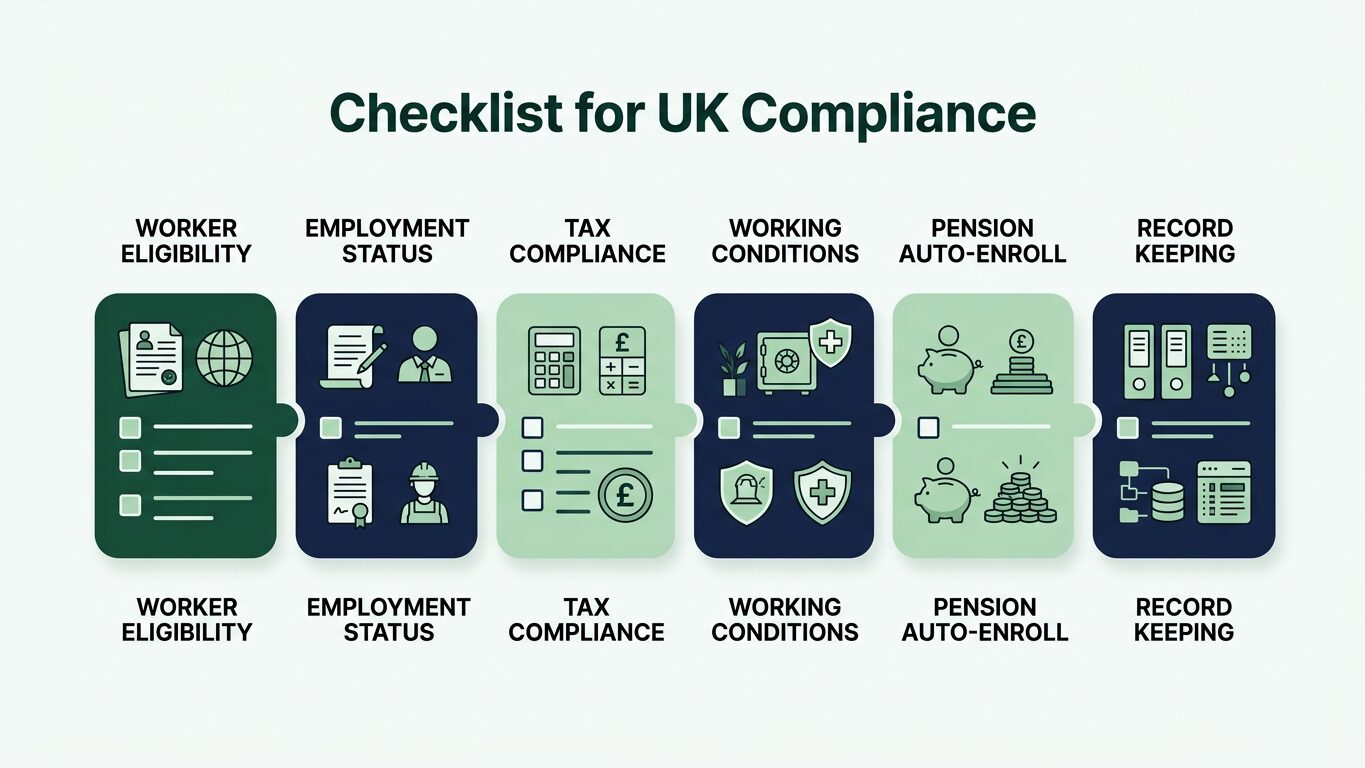
A practical checklist for employers to manage temp staffing compliance and worker credential verification.
Practical Staffing Compliance Best Practices
To manage temp staffing compliance effectively, employers can implement several best practices:
- Clear Service Level Agreements (SLAs) with Agencies: Define responsibilities for compliance checks, documentation sharing, and ongoing monitoring in your agreements with agencies. This includes who is responsible for storing what data and for how long.
- Standardised Onboarding Process: Even for temporary workers, a brief, standardised onboarding process can help verify key credentials, introduce site-specific rules, and ensure workers understand their responsibilities. This also provides an opportunity to cross-reference details with those provided by the agency.
- Digital Record Keeping: Move away from paper files and spreadsheets towards digital systems. This simplifies access, improves data security, and makes audits easier. A system that offers shift management can also centralise worker information alongside shift data.
- Regular Audits: Periodically audit the compliance documentation for temporary workers. This ensures that records are current and that compliance protocols are being followed consistently. This is particularly important for longer-term temporary assignments.
- Utilise Technology: Temporary staffing software can help streamline the verification process, provide alerts for expiring documents, and offer dashboards to track compliance status across your temporary workforce. This reduces the administrative burden and improves visibility, allowing employers engaging temporary workers to maintain better control.
Addressing Compliance Challenges: Common Scenarios
Managing temporary staff can present compliance challenges. Here are a few scenarios and how effective processes can help:
- Scenario 1: Expiring Right-to-Work Document: A temporary worker on an extended placement has a time-limited right-to-work document expiring next month. A dedicated employer portal integrated with a staffing platform could flag this upcoming expiry, allowing the employer to prompt the agency for updated documentation or to make alternative staffing arrangements well in advance.
- Scenario 2: Missing Qualification for a Specific Shift: An agency supplies a worker for a shift requiring a specific certification, but the employer's internal check reveals it's missing or expired. With robust pre-shift verification workflows, this discrepancy can be identified before the shift starts, preventing the worker from commencing duties in a non-compliant manner and allowing the agency to rectify the issue.
- Scenario 3: AWR Implications for Long-Term Temps: A temporary worker approaches the 12-week mark, triggering Agency Workers Regulations (AWR) considerations. While AWR largely falls to the agency, employers sharing long-term plans with agencies via a platform can help both parties track these milestones and ensure the worker receives appropriate entitlements. Tools designed for budget and spend visibility can also help track worker durations.
The Role of Software in Streamlining Verification
The administrative load of verifying credentials and maintaining compliance can be significant, especially for employers regularly using temporary staff. Dedicated software platforms are designed to alleviate this. By providing a central point for agencies to upload worker documents, such platforms enable employers to view and verify necessary credentials at a glance. Features like automated alerts for expiring documents or qualifications ensure that no critical compliance detail is overlooked.
Furthermore, such platforms offer transparent records of all interactions and verifications, creating an invaluable audit trail. This level of operational visibility not only supports compliance but also contributes to better workforce planning and risk management. It transforms what can often be a disjointed, manual process into a streamlined, accountable workflow.
Managing temp staffing compliance and worker credential verification requires diligence. By implementing clear processes, leveraging technology, and fostering strong communication with agencies, employers can navigate these requirements effectively, ensuring their temporary workforce is both capable and compliant. To see how Youtemp can assist your organisation in managing temporary worker compliance and verification, you can book a Youtemp demo today. Tailored to the needs of UK employers, our platform helps you maintain control and insight over your temporary staffing operations.
Practical checklist
- Define Agency SLAs
- Perform Worker Verification Checks (RTW, Quals)
- Standardise Onboarding Process
- Digitise Compliance Records
- Conduct Regular Compliance Audits
- Leverage Staffing Software
Improve Your Temp Staffing Compliance Today
See how Youtemp's platform supports employers in verifying worker credentials and maintaining clear compliance records for their temporary workforce. Book a demo to explore the features.