Clearer Shift Fulfilment: Agencies to Clients Visibility
Agencies give clients visibility into temporary shift fulfilment by sharing real-time booking statuses and worker information, helping employers track requests, worker arrivals, and timesheet approvals efficiently.
usman ahmed

Key takeaway
Proactive and transparent communication of shift fulfilment progress, typically via a client portal, reduces client queries and builds trust in an agency's operational reliability.
Providing clear, real-time updates on temporary shift fulfilment isn't just about good customer service; it’s a critical operational strategy for agencies to manage client expectations and reduce administrative overhead. When agencies give clients visibility into the staffing process, from initial request to worker confirmation and timesheet sign-off, it builds confidence and streamlines workflows for everyone involved. This transparency helps mitigate common issues like frantic client calls about uncovered shifts or missing worker details, replacing them with a shared understanding of shift progress.
Why Agencies Need to Enhance Client Visibility
Reliance on phone calls and emails for shift updates often creates bottlenecks and miscommunication. Clients need to know that their shift requirements are understood and actively being met, especially for vital roles. Without proper visibility into the agency's efforts, employers can become anxious, leading to frequent follow-up calls that burden agency staff and distract from urgent placement tasks. A system that allows clients to monitor their requests provides reassurance, demonstrating that the agency operates with methodical precision, rather than reactively responding to problems.
The Operational Advantage of Shared Fulfilment Visibility
Implementing shared visibility tools offers tangible benefits by cutting down the time agency staff spend on routine client update calls and emails. Instead of dedicating resources to answering 'Is my shift covered?' or 'Who is coming?', staff can focus on sourcing workers, conducting right-to-work checks, and ensuring compliance. A transparent system also creates an invaluable audit trail, documenting every stage of a shift request, worker assignment, and client interaction. This record is crucial for resolving any discrepancies around billing, shift hours, or worker attendance, providing clarity and accountability for both the agency and the employer.
Key Information Agencies Share for Client Visibility
To effectively offer clients visibility, agencies should focus on presenting specific, actionable information. This typically includes:
- Shift Request Status: Progression from initial request through to successful worker placement. Clients can see if a shift is 'open', 'assigned', or 'fulfilled'.
- Worker Allocation Details: Once a worker is confirmed, clients should have access to their name, relevant qualifications, and any vital compliance documents (e.g., proof of a valid DBS check for eligible roles, or a secure link to right-to-work verification process records). This must be handled securely, respecting worker privacy and data protection.
- Arrival and Departure Tracking: Confirmation of a worker's check-in and check-out times for attendance verification and, combined with agreed break times, accurate payment calculations.
- Timesheet Approval Status: Clients need a clear pathway to review and approve submitted timesheets against the actual shifts worked. This links directly to payroll preparation.
- Performance Metrics: For regular clients, transparent reporting on fill rates, no-show incidents, and resolution times builds long-term trust and helps clients plan their staffing strategy.
By providing this level of detail, agencies streamline operational communication and elevate client confidence.
Practical Staffing Examples of Client Transparency
Consider an agency supplying temporary healthcare assistants to busy hospital wards, where immediate staffing updates are critical:
- Anticipating Understaffing: A hospital ward manager posts an urgent shift request via their employer portal for a healthcare assistant. The agency identifies a suitable worker. As soon as the worker accepts the shift through their own worker portal, the ward manager sees the shift status change from 'unfulfilled' to 'confirmed' on their dashboard. They can quickly view the worker's relevant certifications, such as a Level 3 Diploma in Health and Social Care, removing any doubt about coverage.
- Managing Last-Minute Cancellations: An assigned worker unexpectedly falls ill an hour before their shift. The agency updates the system. The ward manager instantly sees the status revert to 'unfulfilled' and can monitor the agency's immediate steps to re-fill, including a notification if a new worker is found or if the shift remains open. This proactive alert allows the ward to make contingency plans without calling the agency.
- Expediting Payroll for AWR: At the end of the week, temporary workers submit their digital timesheets. The ward manager receives an automated notification to approve these. They can verify hours worked against actual attendance directly in their portal, ensuring quick and accurate processing for payroll, which is crucial for compliance with Agency Workers Regulations (AWR) regarding equal treatment after a qualifying period.
These scenarios demonstrate how shared visibility not only addresses immediate staffing needs but also supports regulatory compliance and planning.
Implementing a Client Portal for Robust Visibility
The most effective method for agencies to give clients visibility is through a dedicated client or employer portal. Such a platform provides a single, secure environment where clients can:
- Initiate Shift Requests: Directly input their temporary staffing needs with all critical details, reducing ambiguity.
- Track Fulfilment Progress: Monitor the real-time status of all their open and confirmed shifts, including assigned worker profiles.
- Verify Compliance Documentation: Access relevant compliance records for assigned workers, such as right-to-work evidence, ensuring they retain oversight as hirers.
- Approve Timesheets Digitally: Streamline the timesheet approval process, ensuring accuracy for payroll and invoicing.
- Access Historical Data: Review past shift history, worker performance, and budgetary spend, enabling better future planning.
This centralisation reduces administrative efforts for both parties, minimises errors, and provides a clear audit trail for every transaction. It represents a significant step towards modernising agency-client interactions.
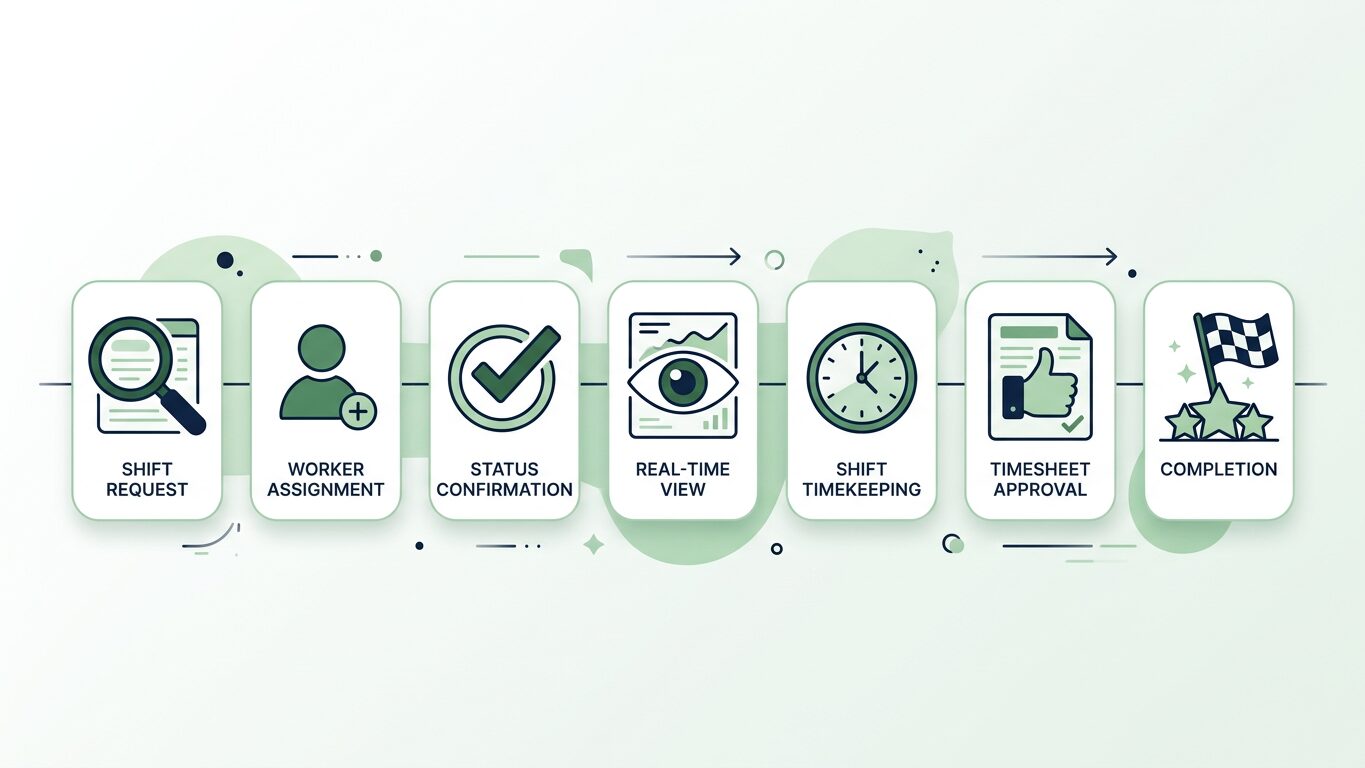
A workflow illustrating how agencies provide clients with visibility throughout the temporary shift fulfilment process.
Checklist for Enhancing Client Visibility Processes
Improving visibility requires a structured approach. Agencies should systematically implement the following:
- Audit Current Client Touchpoints: Document every existing method clients use to request information or monitor shifts, from phone calls to email chains.
- Identify Information Gaps: Pinpoint where clients frequently ask for updates or where delays in information sharing occur.
- Evaluate Technology Solutions: Research and select a platform offering a robust client portal with dynamic shift tracking, timesheet approval, and secure document sharing functionalities, considering how it integrates with your existing agency operations.
- Define Shared Data Policy: Clearly specify what data will be shared with clients, at what stage, and how worker privacy and data security will be maintained.
- Pilot with Key Stakeholders: Introduce the new visibility tools to a few key clients and relevant internal staff to gather feedback and refine functionality before a wider rollout.
- Provide Comprehensive Training: Ensure both client users and your agency staff are fully proficient in utilising the new portal's features and understand the revised workflow.
- Establish Feedback Loops: Regularly solicit input from clients and internal teams to continuously adapt and improve the visibility process.
Operationalising Greater Client Transparency
Moving towards greater transparency is a strategic shift that benefits temporary staffing agencies and their clients. By providing a clear, accurate view of shift fulfilment, agencies can drastically reduce reactive administrative tasks, foster stronger client partnerships, and enhance overall service delivery. This proactive approach transforms the client experience, building trust and positioning the agency as a reliable and forward-thinking staffing partner. Embracing these tools reinforces the agency's commitment to efficiency and client satisfaction.
If your agency is ready to provide better insights into temporary staffing operations and improve how you coordinate shifts for clients, discover what Youtemp can offer. Join the Youtemp waitlist today.
Improve Client Transparency with Youtemp
See how Youtemp can help your agency provide real-time shift fulfilment visibility to your clients, streamlining communication and building stronger relationships.