How Temporary Staffing Agencies Work with Employers in the UK
Temporary workforce management explained: how UK staffing agencies handle shift requests, worker matching, timesheet approvals and payroll on an employer's behalf.
usman ahmed
Updated 25 August 2026

Key takeaway
Efficient temporary staffing relies on clear communication, digital platforms for shift management, and robust compliance processes between agencies and employers.
Temporary workforce management is the process of sourcing, booking, tracking and paying temporary staff — and for most UK employers a staffing agency runs part of that process for them. The agency holds a pool of pre-vetted workers, matches them to your shift requests, manages compliance and right-to-work checks, and handles timesheets and payroll. Your side of the arrangement is the shift request, the approval of hours, and the oversight of cost and quality. This guide walks through each step of that operational cycle.
If your focus is the oversight side rather than the agency side, see our guide to temp workforce tracking for employers.
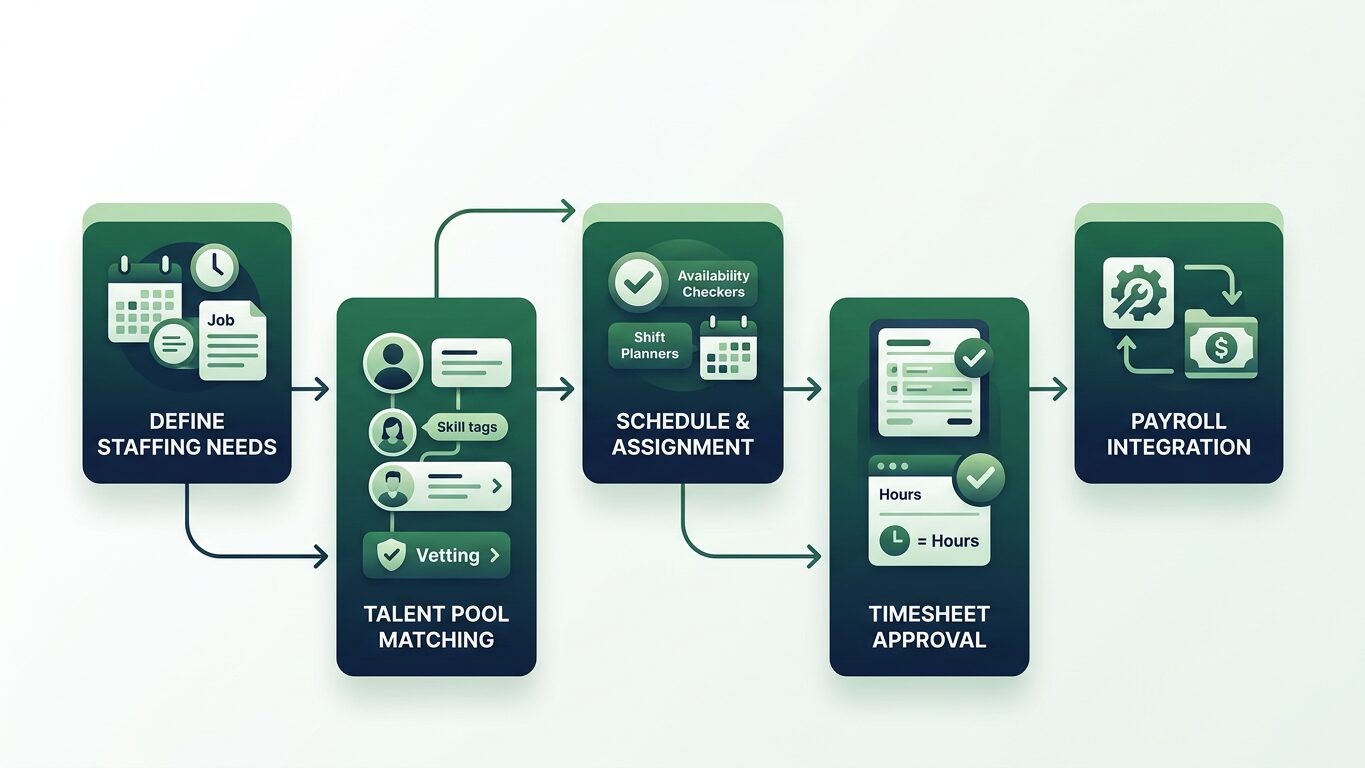
A visual guide to the operational workflow between temporary staffing agencies and employers.
The Initial Request and Worker Matching Process
The engagement between an employer and a temporary staffing agency typically begins when the employer identifies a need for temporary staff. This could be due to seasonal demand, short-term projects, absence cover, or fluctuating workloads. The employer will often contact their preferred agencies with details of the shifts required, including roles, required skills, dates, times, and expected duration. Agencies then use their worker pools to identify suitable candidates.
Modern agencies often rely on software to facilitate this matching process. Once potential workers are identified, their availability is checked, and shift offers are extended. Efficient communication at this stage is critical to secure workers quickly and confirm bookings. Employers benefit from agencies handling the initial outreach and vetting, saving significant in-house administrative time.
Ensuring Compliance and Worker Verification
A key responsibility for temporary staffing agencies work is to ensure workers are compliant with UK employment regulations before they start a shift. This includes critical checks such as right-to-work status, professional qualifications, and, where applicable, Disclosure and Barring Service (DBS) checks for roles involving vulnerable people. Agencies maintain comprehensive records of these documents, often through worker management platforms, making them readily available for compliance audits.
For employers, this means they receive workers who have been screened, reducing their own administrative burden and compliance risk. Agencies also manage holiday pay accrual, National Minimum Wage (NMW) adherence, and where applicable, obligations under the Agency Workers Regulations (AWR), providing clarity on worker entitlements after a qualifying period.
Practical Staffing Examples
To illustrate how temporary staffing agencies work in practice, consider these common scenarios:
- Late Cancellation: An employer has booked five temporary hospitality staff for a weekend event. On Friday afternoon, one worker calls in sick. The agency's system immediately flags the open shift, allowing the recruitment desk to quickly find and offer the shift to another available, qualified worker from their pool, preventing an understaffed event. The employer receives a notification of the replacement, maintaining
booking visibility. - Extended Assignment: An employer initially requests a temporary administrative assistant for three weeks. Due to an unexpected project, they need to extend the assignment by another month. The agency coordinates with the worker and secures their extended availability, updating the employer's booking and ensuring continuity without the employer needing to re-engage in recruitment.
- Timesheet Discrepancy: An employer submits approved timesheets for temporary care staff. One worker disputes their recorded hours. The agency can quickly access the digital shift record, worker sign-in/out times, and communication logs within their platform to verify the actual hours worked and resolve the discrepancy efficiently, preparing for accurate
payroll preparation.
Timesheets, Approvals, and Payroll Preparation
The lifecycle of a temporary shift extends beyond its completion. Once a worker finishes their shift, timesheets must be submitted and approved. Many agencies and employers now use digital timesheet systems where workers log their hours, and employers can review and approve them online. This system reduces paper trails, speeds up the approval process, and creates an auditable record.
After employer approval, the agency processes the timesheets for payroll. This involves calculating wages, accounting for tax and National Insurance contributions, and then invoicing the employer. Efficient timesheet processing is vital for timely worker payments and accurate billing, ensuring a smooth financial flow for all parties.
Operational Visibility and Communication
Effective collaboration between agencies and employers relies heavily on clear communication and visibility into ongoing operations. Agencies use employer portals to allow hirers to post shifts, review worker profiles, approve timesheets, and track spending. This transparency helps employers manage their temporary workforce effectively and plan budgets.
Conversely, agencies benefit from a clear understanding of employer requirements, feedback on worker performance, and advance notice of future staffing needs. This continuous feedback loop helps agencies refine their worker pools and improve their service delivery, contributing to higher fill rates and reduced no-shows. For better operational visibility within your agency, consider dedicated software.
Practical Agency Checklist for Employer Collaboration
- Clear Briefing: Ensure full understanding of employer's shift requirements, including skills, experience, and site-specific information.
- Compliance Verification: Confirm all worker right-to-work, qualifications, and relevant checks are current and documented.
- Digital Shift Management: Utilize a system for posting shifts, managing offers, and tracking confirmations to minimise manual overhead.
- Streamlined Timesheets: Implement a digital timesheet and approval process accessible to both workers and employers.
- Transparent Communication: Provide employers with access to booking visibility and worker information via a dedicated portal.
- Feedback Loop: Establish a process for collecting employer feedback on worker performance and communicating future needs.
How Youtemp Supports the Agency-Employer Workflow
Youtemp is designed to streamline the operational aspects of temporary staffing. Our platform connects agencies, employers, and temporary workers in a single workflow, from shift posting and availability management to timesheet approvals and payroll preparation. It helps recruitment desks manage worker pools, improve fill rates, and ensure compliance, while giving employers greater visibility and control over their temporary workforce needs.
If your agency is looking to improve how you coordinate shifts and manage compliance with employers, consider how Youtemp can simplify your operations. Join the Youtemp waitlist today to learn more about our platform.
Streamline Your Temporary Staffing Operations
Discover how Youtemp can help your agency efficiently connect with employers, manage shifts, and simplify compliance and payroll processes.