Main Benefits of Temporary Staffing for UK Employers
Understanding the main benefits of temporary staffing helps UK employers manage workforce flexibility, control costs, and ensure operational continuity through effective shift management and staff deployment.
usman ahmed
Updated 9 July 2026

Key takeaway
Temporary staffing provides UK employers with a strategic tool for workforce management, offering crucial flexibility and cost control that permanent hiring alone cannot match.
Operating in the UK requires a flexible approach to staffing, especially when demand fluctuates or specialist skills are needed for short-term projects. Temporary staffing offers a practical solution, allowing businesses to adapt quickly without the long-term commitments of permanent hires. For UK employers, understanding the main benefits of temporary staffing can lead to more agile operations, better cost control, and improved responsiveness to market changes. This approach is not just about filling gaps; it's a strategic tool for workforce management.
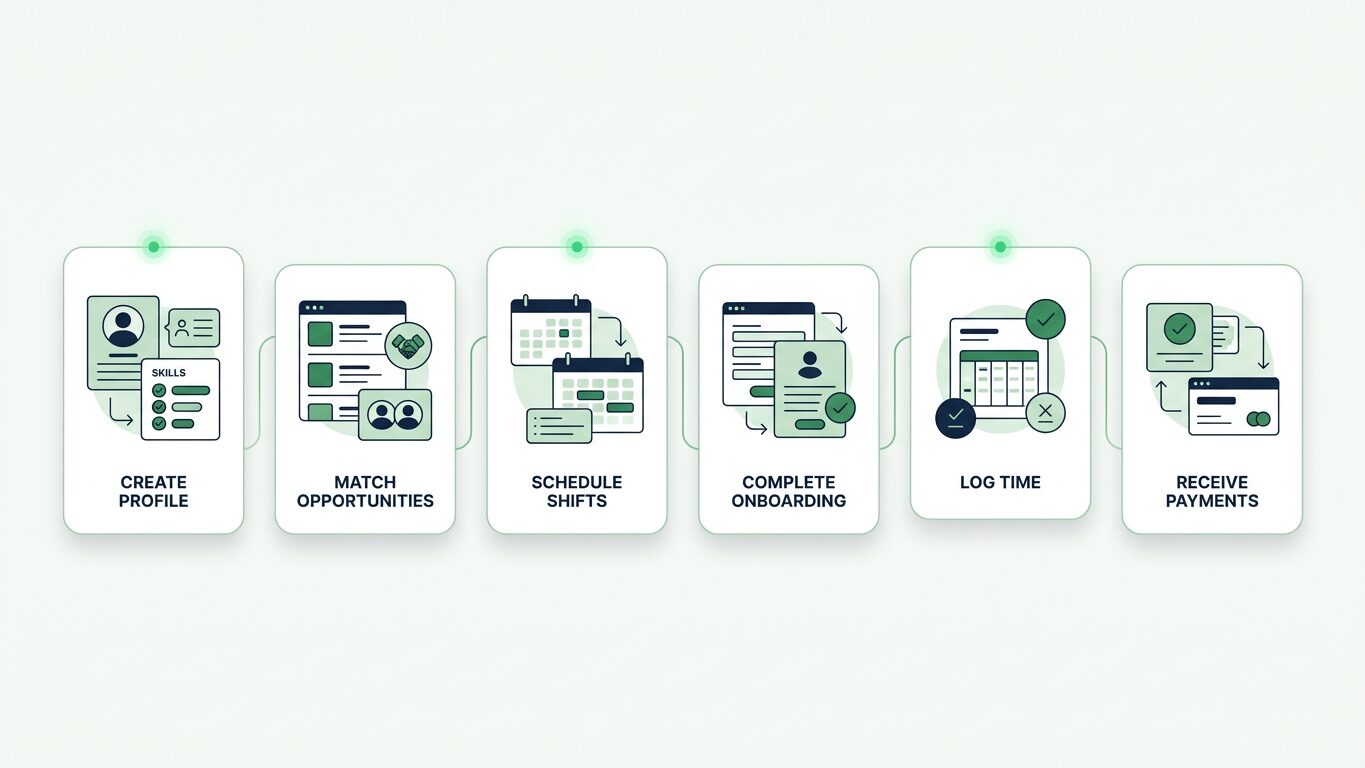
A visual summary of the main practical benefits of temporary staffing for UK businesses.
The Main Benefits of Temporary Staffing: Flexibility and Agility
One of the most significant advantages for employers using temporary staff is the immediate flexibility it provides. Businesses can quickly scale their workforce up or down to meet fluctuating demand, cover staff absences, or manage seasonal peaks. This agility means you're not overstaffed during quiet periods or understaffed when workloads increase unexpectedly. For instance, a logistics firm facing a sudden surge in deliveries before a bank holiday can bring in temporary drivers and warehouse staff without committing to permanent contracts. This allows them to maintain service levels and avoid potential penalties for delayed shipments, directly impacting customer satisfaction and bottom-line stability. The ability to adjust staffing levels rapidly is crucial for operational resilience.
Cost Management and Efficiency
Hiring permanent staff involves a range of costs beyond just salary, including recruitment fees, onboarding, benefits, PAYE, and potentially redundancy packages. Temporary staffing often provides a more predictable and controllable cost structure. Agencies typically cover a significant portion of the administrative burden, including payroll, National Insurance contributions, and sometimes even holiday pay, consolidating these into a single hourly or daily rate. This simplifies budgeting and reduces internal HR overheads. For an employer, this means clearer visibility of expenditure and fewer unexpected costs. It also translates into better resource allocation, as internal teams can focus on core activities rather than extensive recruitment processes. Software solutions for employers can assist with a clear overview of spend, helping to manage budgets effectively.
Access to Specialist Skills and Expertise
Temporary workers often bring specific skills or expertise for short-term projects or cover. This is particularly valuable when a business requires specialised knowledge without the need for a full-time role. Examples include IT project managers, marketing specialists for a product launch, or qualified accountants for year-end audits. Agencies can quickly source individuals with the precise qualifications and experience required, saving employers the time and cost of an extensive search for permanent candidates. This not only fills a skills gap but also introduces new perspectives and efficiencies into the team, potentially upskilling existing staff through collaboration.
Reduced Recruitment Burden and Time-to-Hire
The process of recruiting permanent employees can be lengthy and resource-intensive, involving advertising, CV screening, interviews, and background checks. With temporary staffing, much of this burden shifts to the recruitment agency. Employers simply define their needs, and the agency provides suitable candidates, often with pre-vetted qualifications. This drastically reduces the time-to-hire, allowing businesses to fill critical roles quickly and maintain productivity. For urgent requirements, such as covering an unexpected long-term absence, this rapid response is invaluable.
Employee Evaluation and Reduced Risk
Temporary staffing can serve as an extended interview process. Employers have the opportunity to assess a temporary worker's skills, work ethic, and cultural fit within the team before making a permanent offer. This 'try before you buy' approach significantly reduces the risk associated with a bad hire, which can be costly in terms of recruitment, onboarding, and potential severance. If a temporary worker proves to be an excellent fit and a permanent role becomes available, the transition is often smoother, as both parties already understand expectations and working practices. This directly supports more informed long-term hiring decisions.
Practical Staffing Examples: How Temps Benefit Operations
Consider a few scenarios where temporary staff deliver concrete benefits:
- Seasonal Peaks: A retail chain preparing for the festive season needs additional sales assistants, stockroom staff, and customer service representatives for three months. Rather than hiring permanent staff who would be underutilised post-season, they engage 50 temporary workers through an agency. This allows them to handle increased footfall and online orders efficiently without overspending on an ongoing payroll.
- Project-Specific Expertise: A manufacturing company wins a new contract requiring specialised engineering input for six months. Instead of hiring a permanent engineer for a temporary need, they procure a highly skilled temporary engineer. This injects vital expertise into the project without impacting the long-term headcount or incurring permanent recruitment costs.
- Unexpected Absences: An administrative team manager goes on long-term sick leave. The company immediately requests a temporary administrative assistant to cover key duties. This ensures continuity of operations, prevents administrative backlogs, and allows the remaining team members to focus on their core roles, rather than taking on extra, unfamiliar tasks. Software helps hirers to manage shift requests and worker bookings efficiently.
Navigating Temporary Staffing effectively
To maximise the advantages of temporary staffing, clear communication with your agency is essential. Define your requirements precisely, including skills, experience, project duration, and any specific compliance needs. Utilise platforms that provide clear visibility over worker bookings, timesheet approvals, and budget tracking. This proactive approach ensures you get the right people at the right time, fully leveraging the flexibility and expertise temporary workers provide. Tools that offer staff management features can be invaluable here.
Ready to streamline your temporary staffing operations? Youtemp helps UK employers manage shifts, approve timesheets, and gain visibility over their temporary workforce. Join our waiting list to discover how Youtemp can support your business needs. Join the Youtemp waitlist today.
Practical checklist
- Clearly define temporary staffing needs (skills, duration, compliance).
- Communicate precise requirements to your recruitment agency.
- Utilise platforms for transparent booking, timesheet, and budget visibility.
- Regularly review temporary worker performance and cultural fit.
- Integrate temporary staffing into your broader workforce strategy.
Improve your temporary staffing operations.
Youtemp helps UK employers manage their temporary workforce with transparency and control. Join our waitlist to see how we can assist your business.