Estimating Time to Fulfil a Temporary Staffing Request Effectively
Understanding how long it takes to fulfil a temporary staffing request is crucial for agencies and employers to manage expectations and improve their operational tempo.
usman ahmed

Key takeaway
The speed of fulfilling a temporary staffing request is a direct reflection of operational agility, heavily influenced by real-time worker availability, robust compliance workflows, and streamlined digital communication.
Fulfilling a temporary staffing request swiftly and accurately is a constant challenge for UK recruitment agencies and employers alike. The timeline from a client's initial call to a temporary worker clocking in can vary significantly, impacted by a range of operational factors. This piece focuses on demystifying those factors, providing a clearer picture of what influences the speed of fulfilment and how process improvements can lead to better outcomes for all involved.
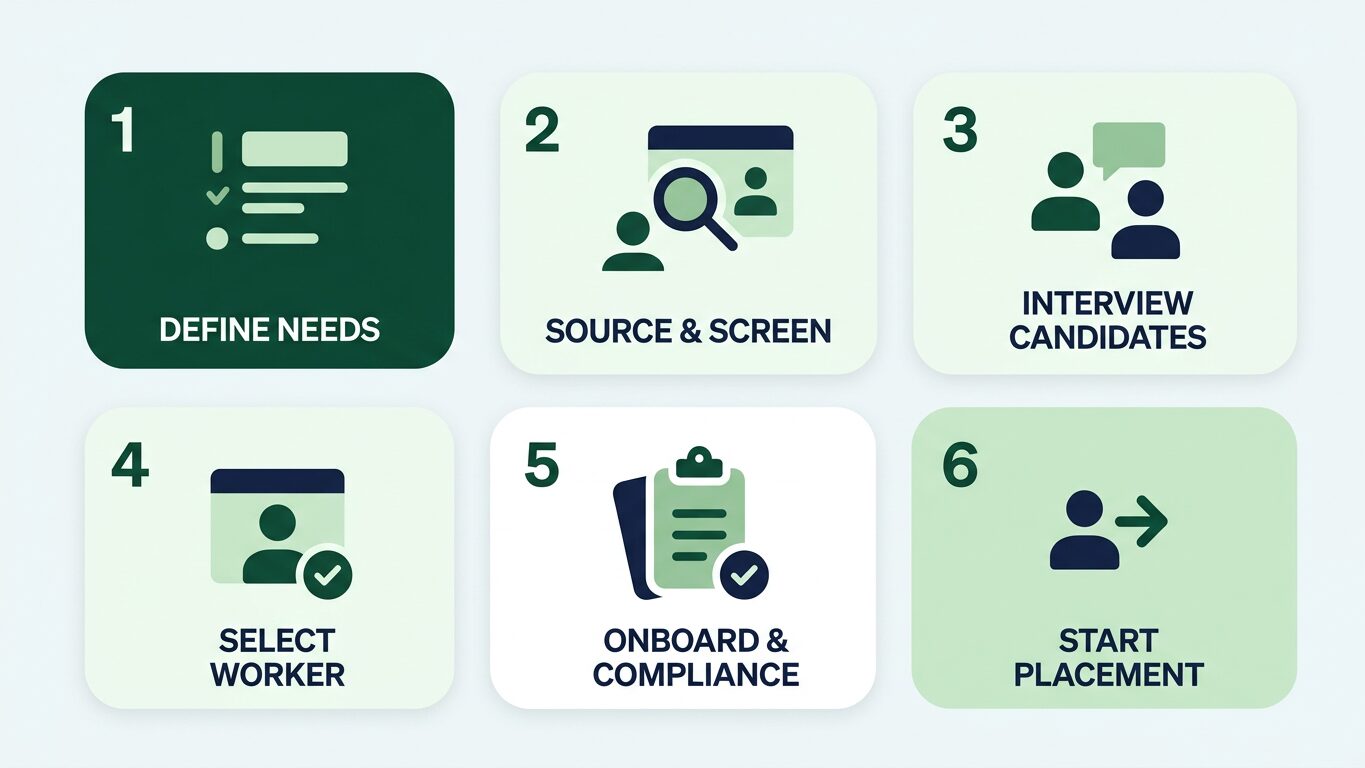
A visual guide to the typical workflow for processing a temporary staffing request efficiently.
Understanding the Stages of a Temporary Staffing Request
When an employer needs temporary cover, the process typically starts with a formal or informal request to an agency, detailing the role, required skills, shift patterns, and any specific site or compliance details. The agency then springs into action, shortlisting suitable workers from their pool. This involves confirming worker availability, cross-referencing skills, and checking that all essential compliance documents – such as current right-to-work evidence and relevant professional qualifications – are in order. Only then can a shift offer be extended, accepted by the worker, and finally confirmed back to the employer. Each step is a potential point of delay if not managed efficiently.
Factors Influencing Temporary Staffing Request Fulfilment Times
Several variables directly impact how quickly an agency can fill a temporary staffing request. The role's specialism, for example, heavily influences the available talent pool; finding a general labourer for an urgent warehouse shift might be quicker than sourcing a highly-skilled specialist nurse for an immediate healthcare need. The urgency of the request plays a significant part; an immediate need for cover due to an unexpected no-show requires rapid response, often through automated notifications, while a planned requirement for a future project allows more time for matching and verification. Geographical location can also affect the response time, particularly in areas with a smaller pool of available temporary workers, and some shifts are harder to fill than others.
Worker Availability and Engagement
The real-time availability of suitable temporary workers is often the most critical bottleneck. Agencies manage extensive worker pools, but a worker's capacity can fluctuate daily as they juggle shifts across multiple agencies or manage personal commitments. For example, a care worker might accept a shift from Agency A, but then see a more suitable or higher-paying shift pop up from Agency B. Agencies using platforms like Youtemp to track worker availability in real-time can significantly reduce chasing time. A worker's responsiveness to shift offers – whether through an app notification or a direct call – also directly impacts the speed of fulfilment. Fast confirmation mechanisms are essential to avoid missing opportunities.
Compliance and Verification Requirements
Rigorous compliance is essential in temporary staffing; however, it can introduce delays if not streamlined. Before any worker commences a shift, agencies must often verify identity, confirm UK right-to-work status, check professional qualifications, and sometimes coordinate DBS checks or obtain up-to-date references. While many checks are completed during onboarding, client-specific demands (e.g., enhanced DBS for certain roles) or impending compliance expiry dates can necessitate immediate action. Employers relying on agency workers are also expected to verify certain aspects, particularly in regulated environments. Centralising and easily accessing compliance documents helps ensure that records are ready for audit and reduces pre-shift delays.
Practical Staffing Examples Affecting Fill Rates
Consider these common scenarios where the time taken to fulfil a temporary staffing request can vary significantly:
- Late Cancellation Cover (Hospitality): A busy restaurant's chef calls in sick 3 hours before an evening service. The agency uses its platform to instantly alert pre-vetted, available chefs within a 5-mile radius. One chef accepts via the app within 10 minutes, their right-to-work and experience already verified. The agency confirms with the restaurant, and the worker arrives on time. Fill time: Under 1.5 hours.
- Planned Project Support (Construction): A construction firm needs three experienced groundworkers for a project starting in two weeks. The agency identifies ten potential candidates. Over a few days, they confirm availability, verify CSCS cards, and collect updated site induction details. The firm holds a brief online interview with the preferred candidates. Fill time: 3-5 working days.
- Unexpected Increase in Demand (Warehousing): A logistics firm experiences a sudden spike in parcel volume and needs ten additional pickers for their night shift, requested midway through the day. The agency, with a large pool of general operatives, sends a bulk shift offer via their worker portal. Six workers accept within an hour, two more over the next two hours, and the final two are confirmed through follow-up calls. All compliance is up-to-date. Fill time: 4-6 hours.
These examples highlight that while immediate needs can be met rapidly with the right tools, more complex or larger requests still benefit from efficient workflows. Enabling employers to submit clear, detailed requests directly via an employer portal can significantly cut down the initial communication lag. This transparency allows agencies to respond more accurately and quickly.
How Technology Streamlines Temporary Staffing Workflow
Modern temporary staffing software is transforming how agencies and employers handle temporary staffing requests. Digital platforms automate many of the manual tasks, from posting shifts and matching workers to managing compliance documentation and processing timesheets. Agencies can leverage these systems to:
- Instantly access worker availability: Workers update their availability directly, giving agencies real-time data to match shifts. This avoids time-consuming phone calls or email exchanges.
- Automate shift offers: Send out shift details to suitable workers in moments via push notifications, significantly reducing response times compared to traditional methods.
- Centralise compliance: Maintain all worker documents, right-to-work checks, and certifications in one secure, accessible place for quick verification, crucial for audit trails.
- Improve communication: Provide clear, instant channels for workers to accept or decline shifts, and for employers to approve timesheets promptly, reducing payroll preparation delays.
By streamlining these operational steps, technology significantly reduces the average time it takes to move from an employer's request to a worker starting a shift. This not only helps boost fill rates but also enhances overall operational visibility for agencies and employers. Explore how Youtemp can assist your needs with shift management and worker coordination.
Ultimately, the time taken to fulfil a temporary staffing request is a direct measure of an agency's and employer's operational agility. Leveraging effective technology and maintaining clear, transparent communication channels are key to reducing waiting times and ensuring that temporary staffing needs are met promptly and consistently.
Ready to enhance your temporary staffing operations? Join our waitlist for early access to Youtemp and streamline your agency or employer workflow.
Practical checklist
- Define job brief clearly upfront with all shift details.
- Ensure worker pool contact details and availability are current.
- Pre-vet workers and keep compliance documents updated digitally.
- Utilise automated shift matching and notification systems.
- Establish clear communication protocols for shift offers and acceptances.
- Regularly review fill rate metrics to identify bottlenecks.
Improve Your Temporary Staffing Fill Rates
See how Youtemp can help your agency or business manage temporary staffing requests more efficiently, reducing time to fill and boosting operational visibility. Join our waitlist.