Streamlining How Employers Request Temporary Staff Quickly
Employers often need to request temporary staff quickly to cover absences, manage peak demand, or fill specialist roles.
usman ahmed

Key takeaway
Adopting a structured process and using a dedicated employer portal significantly shortens the time it takes to request and secure suitable temporary staff, improving operational continuity and compliance.
For UK employers, navigating the process of sourcing temporary staff can sometimes feel like a scramble, especially when unexpected needs arise. Whether it's covering a sudden sickness, scaling up for a seasonal rush, or finding specialist skills for a short project, the ability to rapidly secure the right temporary workers is critical for maintaining operational continuity. This article explores practical approaches and software tools that help employers streamline how they request temporary staff, focusing on clarity, speed, and effective communication with their temporary staffing agencies.
Understanding Your Temporary Staffing Needs
Before you can efficiently request temporary staff, it's crucial to have a clear understanding of what you need. This isn't just about the number of workers; it's about defining the role, required skills, shift patterns, and the duration of cover. A well-defined request helps agencies match the right workers more quickly, reducing back-and-forth and potential mismatches. For example, if you need a warehouse operative for night shifts, specifying the exact hours, required machinery certifications, and any safety training is vital. Equally, if demanding immediate compliance documents or specific right-to-work checks, these details should be part of the initial request.
Practical Staffing Scenarios
Consider these common situations where quick temporary staffing is essential:
- Unexpected Absence: A key team member calls in sick for a critical shift or takes emergency leave, leaving a gap that impacts immediate production or service delivery.
- Seasonal Peaks: A retail business anticipates a significant increase in customer traffic over a bank holiday weekend or during sales events, requiring additional support staff for front-of-house or stock management.
- Project-Based Work: A construction company needs a specific skilled tradesperson for a 3-week phase of a build, with a precise start date and required qualifications.
- Event Staffing: A venue needs a surge of hospitality staff for a large-scale event with varied roles, hours, and specific uniform requirements.
In each scenario, the clearer and more detailed the initial request, the faster an agency can respond with suitable candidates. Missing information often leads to delays as agencies seek clarification.
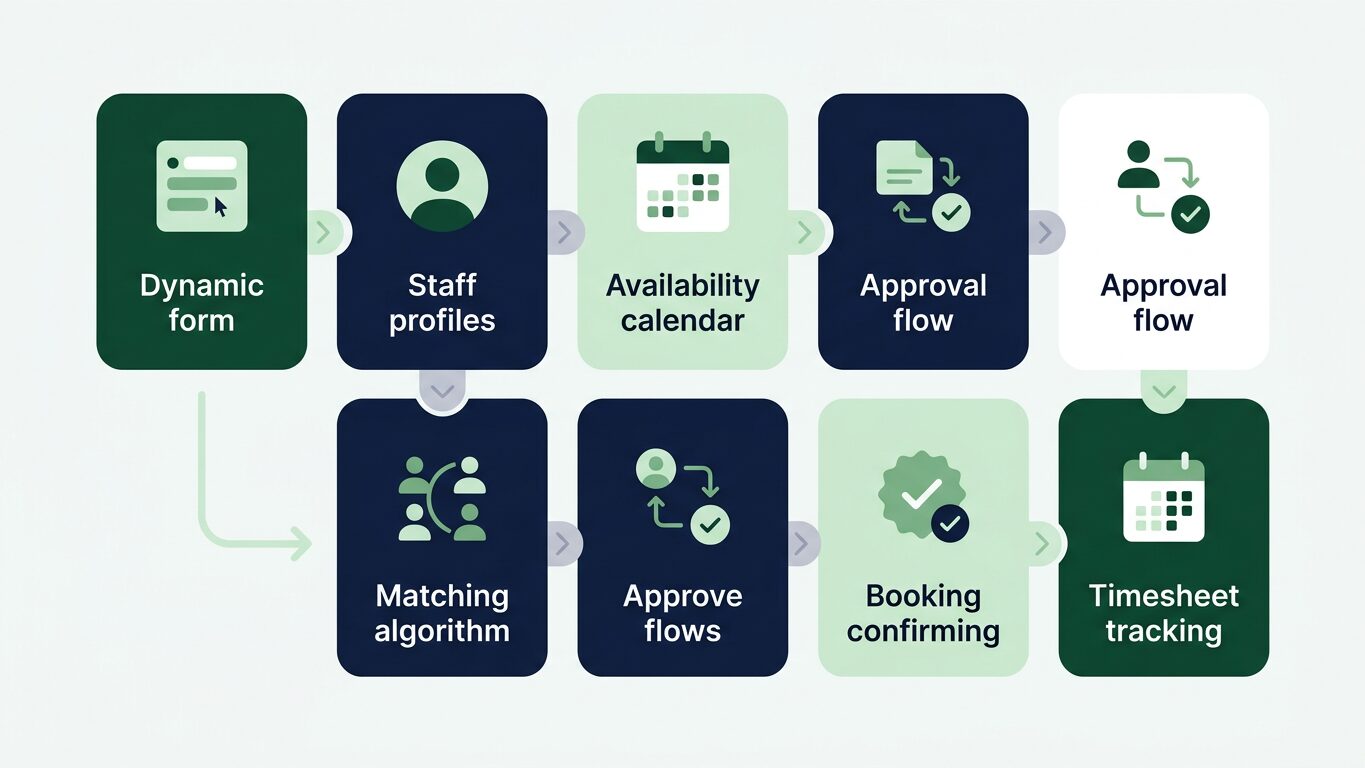
A streamlined workflow can significantly enhance how employers request temporary staff, moving from need to fulfilment.
Streamlining the Request Process with an Employer Portal
Traditional methods like phone calls and emails can be slow and lead to miscommunications when employers request temporary staff. A dedicated employer portal provides a structured way to submit and track requests. Such platforms allow hirers to immediately post shifts or worker requests, detailing all necessary information in a standardised format. This means agencies receive complete information upfront, enabling faster matching and fulfilment.
Key features of an effective employer portal for requesting staff include:
- Shift Request Templates: Pre-configured forms for common roles, allowing employers to quickly select and populate shift details.
- Real-time Visibility: See which agencies have picked up your request, how many workers have been offered, and confirmation of accepted shifts.
- Worker Verification: View verified worker profiles, including essential compliance documents and qualifications, before shift confirmation.
- Communication Hub: A centralised place for messages with agencies regarding specific requests, reducing reliance on fragmented email chains.
Using a portal helps ensure that all relevant compliance checks, such as right-to-work evidence, are recorded and visible, giving employers confidence in their temporary workforce. It also allows agencies to track fill rates more effectively and address potential no-shows.
Best Practices for Faster Temporary Staff Fulfilment
Beyond technology, certain operational practices can significantly improve your speed in sourcing temporary staff:
- Define Preferred Suppliers: Establish relationships with a few key agencies that understand your business and typical staffing needs. This helps them prioritise your requests.
- Standardise Job Descriptions: Have ready-made descriptions for common temporary roles. This reduces the time spent drafting requests from scratch.
- Provide Comprehensive Details: Always include shift times, location, required skills, any specific equipment use, and contact person details. The more information, the better the match.
- Set Clear Deadlines: Communicate when you need the worker by. This helps agencies manage their talent pools and prioritisation.
- Feedback Loop: Provide agencies with feedback on the workers provided. This helps them refine their understanding of your preferences for future requests.
Effective staff management is not just about filling a shift; it's also about ensuring the quality and suitability of the temporary workers on site. Building a positive relationship with your agencies based on clear, consistent communication helps achieve this.
Maximising Your Budget and Operational Visibility
When employers request temporary staff, it's not just about speed; it's also about managing costs and maintaining visibility over spend. Software designed for employers can connect shift requests directly to budget reporting functions. This allows for real-time tracking of temporary worker hours and associated costs, providing a clear overview against allocated budgets. For example, if a department has a monthly budget for temporary cover, an employer portal can show exactly how much has been committed or spent on live shifts and approved timesheets.
Furthermore, having a consolidated view of all temporary worker bookings across different departments or locations improves operational oversight. This can highlight patterns in temporary staffing needs, enabling better forecasting and proactive planning, rather than reacting to urgent, last-minute requirements. The visibility extends to advanced features like automated timesheet approvals and integrated invoicing, reducing administrative burdens and ensuring accurate payroll preparation from the agency side.
Checklist for Efficient Temporary Staffing Requests
- Clarify Role Requirements: Define specific skills, experience, and certifications needed for each temporary position.
- Detail Shift Logistics: Clearly state dates, start/end times, breaks, location, and any specific equipment or uniform requirements.
- Specify Compliance Needs: Highlight any mandatory right-to-work checks, DBS, or specific training documents required for the role.
- Utilise an Employer Portal: Use a dedicated platform to submit requests, track progress, and communicate with agencies.
- Establish Preferred Agency Relationships: Work with agencies that understand your business and can reliably provide suitable candidates.
- Provide Timely Feedback: Give agencies feedback on temporary workers to help them improve future matches.
- Review Budget vs. Spend: Monitor temporary staffing costs in real-time through an integrated system.
By following these steps, employers can move from reactive hiring to a more strategic and efficient approach for temporary staffing.
Need to Request Temporary Staff More Efficiently?
If your current methods for connecting with agencies and managing temporary worker requests are causing delays or administrative overhead, a dedicated platform can simplify the process. Youtemp offers tools specifically designed to help employers streamline their temporary staffing operations, from posting shifts to approving timesheets efficiently. If you're looking to improve how you request temporary staff and gain better control over your workforce management, consider exploring a solution built for your needs. Join our waitlist for early access and see how Youtemp can assist your operational requirements.
Improve How You Request Temporary Staff
Discover how a dedicated platform can help you post shifts, track requests, and manage your temporary workforce with greater ease and visibility.