Boosting UK Temporary Staffing Fill Rates: An Agency Operational Guide
Recruitment agency guide to UK temporary staffing fill rates - worker matching, compliance workflows, shift bookings and employer-side coordination.
usman ahmed
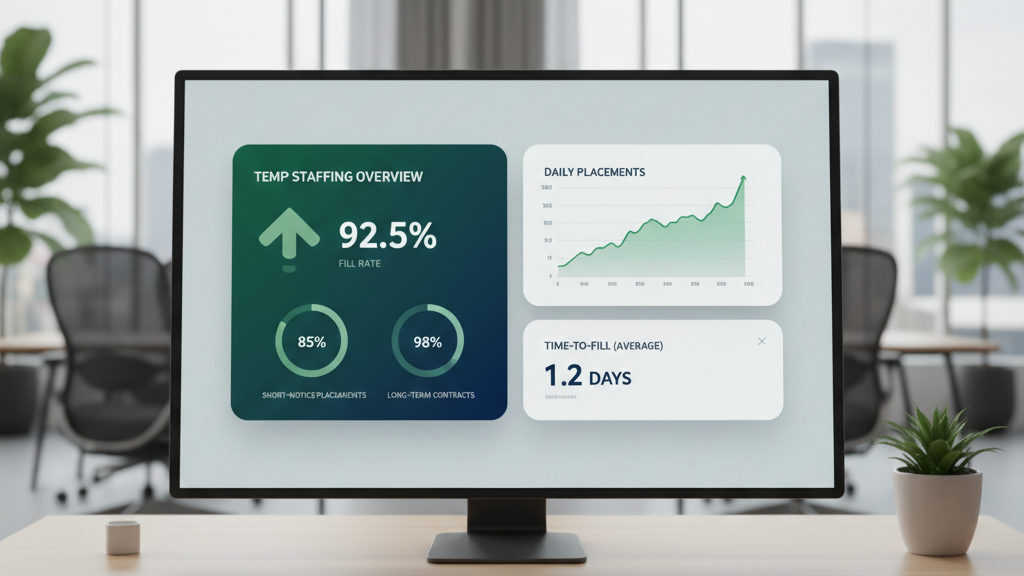
For UK temporary staffing agencies, optimising fill rates is an ongoing operational priority. A high fill rate indicates effective worker deployment and strong client satisfaction, while a low rate can signal challenges in worker availability, accurate matching, or communication gaps. In a competitive UK market, agencies need to effectively coordinate a diverse range of factors, from worker compliance and shift preferences to real-time client demand. This isn't just about placing a worker; it's about placing the right worker, at the right time, in the right role, consistently, while adhering to UK-specific regulations like AWR and right-to-work checks. Achieving this requires clear visibility into worker pools, efficient communication channels, and a robust system for managing shifts and assignments. The goal is to minimise 'no-shows' and unfilled shifts, ensuring stability for both employers and temporary workers.
Understanding and Benchmarking Your Agency's Fill Rate
Before you can effectively improve your fill rate, you need a clear, data-driven understanding of your current performance. This goes beyond a simple percentage; it requires segmentation. Consider breaking down your fill rates by client, shift type (e.g., last-minute, planned), industry sector, or even time of day/week. Are certain employers consistently harder to staff? Do particular types of shifts frequently go unfilled? Understanding these nuances helps pinpoint specific operational bottlenecks.
Key questions for analysis:
- What percentage of requested shifts are you successfully filling overall?
- Which employers or industries consistently present lower fill rates?
- Are specific skills, qualifications, or compliance requirements (e.g., specific certifications) consistently in short supply within your available worker pool?
- How frequently do late cancellations or worker no-shows impact your final fill rate, and for which shift types?
- What is your average time-to-fill for different shift categories, and where are the delays?
Gathering this detailed data provides a vital baseline. Without this clear operational picture, efforts to improve fill rates can be misdirected or inefficient. Tools that track these metrics automatically can be particularly useful, moving beyond fragmented spreadsheets and manual calculations.
Optimising Worker Availability and Engagement
One of the most common reasons for low fill rates is a mismatch between employer shift demand and worker availability. Temporary workers often register with multiple agencies, and their availability can fluctuate frequently. Relying on phone calls, emails, or messaging apps to track this can lead to outdated information, wasted time, and missed opportunities to place workers.
Agencies that empower their worker pool to update their availability in real-time typically see better results. A dedicated worker portal allows temps to set their working preferences, declare their availability, and even accept or decline shift offers directly. This significantly reduces the administrative burden on your recruitment desk and improves the accuracy of available worker data. Engaged temps, who feel valued and have clear visibility of shifts, are more likely to accept shifts from your agency.
Streamlining Shift Matching and Fulfilment
Once you have accurate availability data and a clear understanding of skillsets, the next critical step is to efficiently match workers to open shifts. Manual matching can be slow and prone to errors, especially when dealing with a large worker pool and numerous daily shifts across various employers. This is where dedicated temporary staffing tooling can play a significant role.
Consider software that offers intelligent shift matching capabilities. These systems can quickly identify suitable workers based on availability, specific skills, necessary qualifications, employer preferences, and travel distance. This not only speeds up the fulfilment process but also improves the quality of matches, which can lead to better worker retention and fewer complaints from employers regarding suitability or AWR compliance.
Proactive Compliance and Right-to-Work Management
Compliance requirements are a frequent bottleneck in shift fulfilment for UK agencies. If a worker's right-to-work documents are expired, their training certifications are out-of-date, or AWR requirements are not met, they cannot be placed. Agencies must have a proactive system for managing worker documents, certifications, and compliance statuses.
Software that provides automated reminders for expiring documents and allows workers to upload and update their compliance information in one central place can prevent last-minute issues. Ensuring all workers in your pool are fully compliant and ready to work beforehand means you can deploy them quickly when a shift comes in, directly contributing to higher fill rates and reducing the risk of non-compliance penalties. This reduces delays that often occur when chasing these details manually.
Improving Timesheet & Payroll Preparation Efficiency
The efficiency of timesheet collection and approval directly impacts worker satisfaction and payroll preparation. Delays here can lead to workers seeking shifts elsewhere. Digital timesheet submission and approval processes simplify this, ensuring workers are paid accurately and on time, which enhances their engagement and reliability. Providing employers with an employer portal to approve timesheets quickly can further streamline this crucial step, reducing administrative overhead for both parties and ensuring prompt payment processing.
Enhancing Operational Visibility for Recruitment Desks
Understanding the real-time operational status of your recruitment desk is key to identifying and addressing fill rate issues promptly. This includes comprehensive visibility into:
- New shift requests from employers
- Pending shift offers awaiting worker acceptance
- Confirmed shifts and any potential no-shows
- Worker status (available, booked, unavailable, in compliance check)
- Timesheet submission and approval progress
Centralised dashboards offering this operational visibility can help managers identify bottlenecks, reallocate resources, and make informed decisions to improve overall shift fulfilment. It moves your agency from reactive problem-solving to proactive management, directly supporting higher fill rates.
Ready to Enhance Your Agency's Fill Rates?
Improving temporary staffing fill rates requires a focused, multi-faceted approach, combining transparent worker availability, efficient matching, proactive compliance management, and clear communication. Platforms designed specifically for UK temporary staffing operations can provide the tools needed to manage these complexities. If your agency is looking to streamline its processes, reduce no-shows, and secure more successful shift placements, consider exploring how dedicated temporary staffing software can help. Arrange a demo today to see Youtemp in action.
See Youtemp in action
Built for UK agencies, employers and workers managing temporary staffing workflows.